
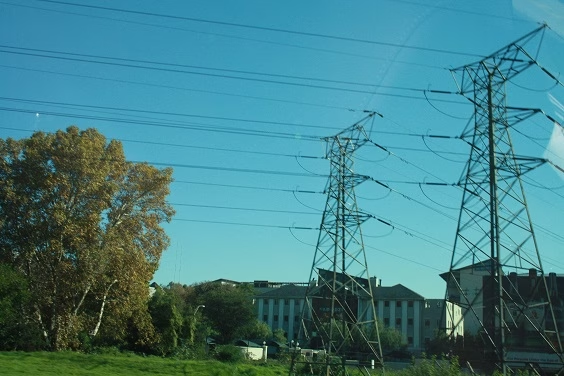
A Guide To Public Utility Companies
Public utility companies play a vital role in our everyday lives, supplying essential services that keep households and businesses running smoothly. From electricity and gas to water and waste management, these services are the backbone of modern society. This guide will explore what public utility companies are, how they operate, and their importance in the UK.
What Are Public Utility Companies?
Public utility companies provide infrastructure and services considered essential for the public good. In the UK, these typically include:
- Electricity supply and distribution
- Natural gas provision
- Water supply and sewage services
- Telecommunications and broadband
- Public transport (in some contexts)
- Waste collection and recycling
These companies are either privately owned, publicly traded, or regulated by government bodies to ensure fair pricing, reliable service, and safety compliance.
How Are Utilities Regulated in the UK?
The UK has a strong regulatory framework to ensure utility companies deliver consistent and fair service. Key regulators include:
- Ofgem (Office of Gas and Electricity Markets) – Oversees the gas and electricity markets
- Ofwat – Regulates water and sewerage services
- Ofcom – Governs the telecommunications and postal industries
- Environment Agency – Monitors environmental compliance and waste management
These regulators ensure that companies act responsibly, invest in infrastructure, and protect consumer rights.
The Shift from Public to Private Ownership
Historically, many UK utility services were state-owned. However, during the 1980s and 1990s, the government privatised several sectors. British Gas, British Telecom, and the water authorities were sold to private investors, transforming the market.
While privatisation introduced competition and innovation, it has also sparked debate around affordability, foreign ownership, and long-term sustainability. Regulatory bodies now play a crucial role in maintaining balance between corporate interest and public welfare.

Choosing Your Utility Provider
In today’s market, most utility sectors (especially energy and broadband) offer consumers the ability to choose their multi utility provider. This means you can shop around for the best deals and switch companies if needed. Comparison websites such as:
…can help you compare tariffs, services, and customer reviews to find the right provider for your needs.
The Future of Public Utilities
With climate change and technological advancements reshaping the world, utility companies are under increasing pressure to modernise. Trends include:
- Investment in renewable energy and smart grids
- Development of smart meters and real-time usage tracking
- Water conservation initiatives
- Expansion of high-speed broadband networks
- Improved recycling and waste reduction programmes
Public utility companies are adapting to meet environmental goals, improve efficiency, and support sustainability efforts.
Public utility companies are essential to our daily lives, yet they often go unnoticed until something goes wrong. By understanding how these companies function and how they are regulated, consumers can make more informed choices and hold providers to higher standards. As the UK continues to evolve, so too will the landscape of public utilities—shaping a more connected, sustainable future for all.

The Home Renovation Shows Team is led by property experts dedicated to the full lifecycle of building management—from the grit of a structural overhaul to the precision of professional operational hygiene. With a focus on sustainable maintenance and data-driven property care, the team provides actionable insights for both homeowners and business leaders. Whether navigating a DIY renovation or optimizing a commercial workspace, their mission is to ensure every square foot is functional, healthy, and built to last.