

Small Bedroom Ideas: Expert Ways to Make Your Space Feel Bigger
Your bedroom ought to serve as your private retreat—and a compact footprint is certainly no barrier to luxury. In fact, at Bedstar, we know that smaller bedrooms provide the ideal canvas for embracing vibrant colours, striking patterns, and clever design. Approaching a compact space with imagination allows you to develop a beautiful layout that appears more spacious, functions flawlessly, and feels uniquely yours.
So, where do you begin? This comprehensive guide takes you through everything a limited space requires—from intelligent furniture positioning and storage solutions to ingenious techniques involving mirrors, window treatments, and illumination. Whether you are dressing an exceptionally tiny box room or simply wishing to maximise every available inch, these small bedroom ideas genuinely deliver results.
Small Bedroom Ideas

Layout Planning for Compact Bedrooms
Before moving a single piece of furniture, you must approach your space with a clear spatial strategy. Successful small room design is entirely a game of millimetres.
Map Out Your Floor Plan
Creating a scaled floor plan is the most critical first step. A straightforward pencil-and-paper sketch is perfect for visually organizing your layout, though a digital room-planner tool can provide extra precision when calculating remaining clearance zones.
When drawing your layout, ensure you document all key structural elements:
- Windows, door frames, and built-in wardrobes.
- Structural alcoves, chimney breasts, or fireplace mantels.
- The location of electrical sockets, radiators, and light switches.
Design Tip: Remember to account for door swings. A standard UK bedroom door measuring 90 cm across requires a full 90 cm clear arc to open properly. Positioning furniture within that sweep is an error you will quickly come to regret.
Position the Bed for Maximum Flow
The bed is the natural focal point of any sleep sanctuary. Placing your bed frame centrally against the most prominent wall—typically the one opposite the doorway—provides the layout with pleasing symmetry and allows adequate room to reach the mattress from either side.
However, beds do not always need to sit in the centre of a small room. Nestling a double or single bed frame snugly into a corner represents one of the finest very small bedroom designs available. This immediately liberates valuable floor space, making the room appear larger and airier, whilst giving the bed a delightfully cosy, cocoon-like character.
Room proportions hold equal importance to raw square footage. A haphazardly arranged 20 m² bedroom can easily feel cramped, whereas a cleverly organized 12 m² room can feel open and practical. For perspective, a double bedroom requires a floor area of no less than 11.5 m² to comfortably accommodate two people, whilst a single bedroom demands at least 7.5 m² and a minimum width of 2.15 m.
The most common error in small bedroom decor is selecting an oversized bed that leaves no room for appropriately scaled bedside tables. Be realistic about what your room can comfortably house.
Furniture Selection and Arrangement Strategies
Excessive or bulky furniture represents the quickest method to make a small bedroom feel stifling. It obstructs natural pathways, blocks out ambient light, and visually overwhelms the space. The correct approach centres entirely on scale and dual functionality.
Choose Scaled-Down and Floating Furniture
Slender bedside tables measuring just 25 to 35 cm in width prove a far more intelligent choice than cumbersome nightstands. Alternatively, wall-mounted or floating bedside shelves rank among the best-kept secrets in compact design. Because they attach securely to the wall and consume zero floor space, they preserve floor visibility—which is one of the simplest visual techniques to make a room feel wider.
If you are not prepared to commit to wall-mounting, a small round stool or a compact chair serves as a charming bedside alternative. Round tables are particularly ideal for tight corners, as their smooth, curved edges permit significantly easier movement around the bed.
Select the Right Bed Base
Your bed frame dimensions must always be balanced against wardrobe accessibility and circulation space. For numerous UK homes, a small double bed (4.0-foot) strikes the absolute ideal balance—offering greater sleeping capacity than a single without commanding the floor space of a standard double.
If storage is your primary concern, an ottoman bed or a divan base with integrated drawers is an absolute gamechanger. At Bedstar, we frequently recommend ottoman frames for tight spaces because the complete mattress platform lifts upward to expose a substantial storage cavity beneath, entirely eliminating the need for the side clearance that traditional pull-out drawers require. Furthermore, opting for a low-foot-end bed frame lends your bedroom a more expansive, breathable quality.
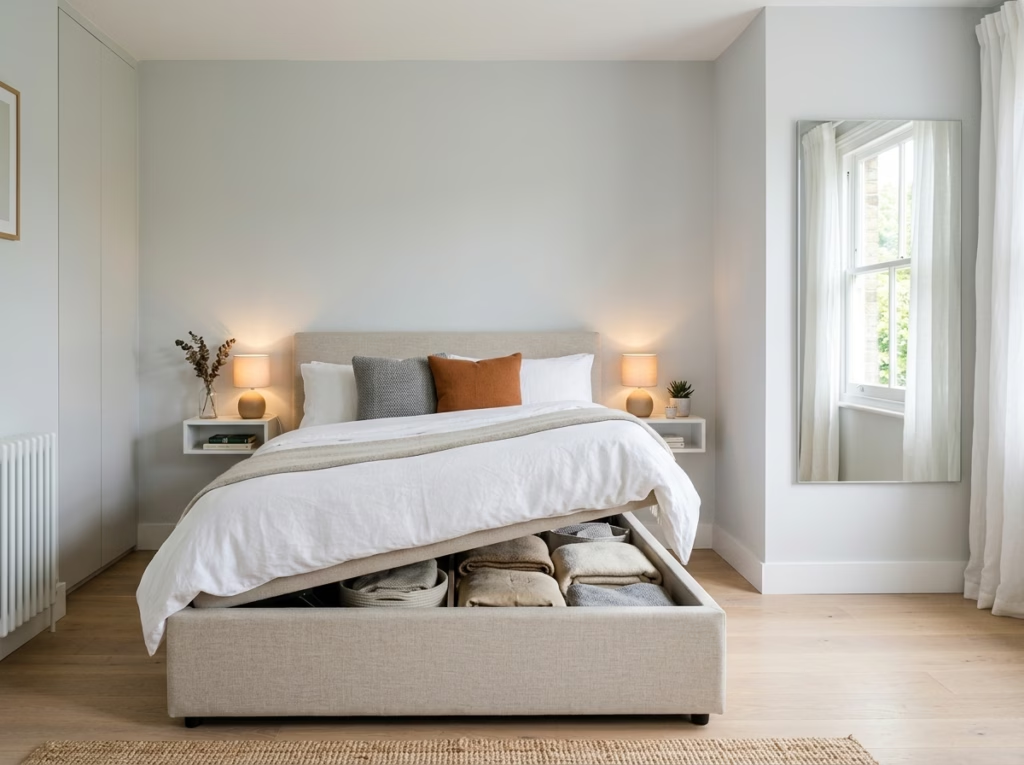
Pictured: A beautifully styled, small but airy modern British bedroom demonstrating space-saving design. In the centre is a plush small double bed frame with a low foot-end, upholstered in a light beige linen fabric.
Build Upward, Not Outward
When floor area is limited, the solution lies in building vertically. Tall, slender wardrobes deliver incredible storage capacity without encroaching across the room. Try to maintain your principal storage units along a single wall; this liberates the remaining walls for a statement headboard or artwork, keeping the overall environment from feeling boxed in.
Small Bedroom Storage Ideas That Maximise Every Inch
Once your furniture layout is resolved, the subsequent challenge is managing clutter. A small bedroom possesses far more storage potential than you might imagine; it is simply a matter of making your walls and architectural features contribute more effectively.

Pictured: A close-up interior design photograph of a compact bedroom alcove utilised perfectly for storage. A bespoke, floor-to-ceiling fitted wardrobe in a soft off-white colour fills the alcove seamlessly.
- Exploit Alcoves and Recesses: Architectural alcoves are an underutilised asset. Bespoke fitted wardrobes can nestle seamlessly into these recesses, accommodating sloped ceilings or irregular angles perfectly. If you are dealing with a shallower alcove, installing a simple hanging rail paired with an elegant fabric curtain creates an instant wardrobe without the bulk of heavy wooden doors.
- Utilise the Space Under the Bed: The zone beneath your bed frame is prime real estate. Rolling storage containers glide effortlessly across carpet and hard flooring alike, granting straightforward access to spare linens. Vacuum storage bags are another brilliant solution—compressing bulky winter coats and jumpers to a fraction of their original volume whilst safeguarding them from dust.
- Install Shelving Above the Bed: The wall space directly above your headboard is frequently neglected. Slender open shelves can display books, hold alarm clocks, and provide mounting points for reading lights without occupying an inch of floor space. For safety, always select lightweight materials (such as slim pine or plywood), anchor the shelves firmly into wall studs, and avoid placing heavy or fragile objects directly overhead.
- Add Hooks and Picture Rails: Reclaim vertical space for items that might otherwise accumulate on chairs or the floor. Robust, stylish metal hooks manage dressing gowns and bags effortlessly, whilst slender rails with hanging organisers keep accessories beautifully systemised.
Design Techniques Employing Colour, Light, and Mirrors
Beyond physical furniture, you can use interior design psychology to visually expand the boundaries of your room.
Embrace Pale, Reflective Colour Schemes
An appropriate colour scheme can accomplish much of the spatial work in a compact bedroom. Neutral tones maximise both dimensions and luminosity:
- Pure White & Cream: White walls and ceilings reflect daylight flawlessly, rendering a box room immediately more expansive.
- Gentle Pinks & Warm Alabasters: These shades remain crisp, warm, and welcoming, harmonizing beautifully with cool textiles when you prefer not to use a uniform white palette.
- Pale Greys & Soft Taupe’s: These tones reflect natural illumination efficiently, bestowing the room with a sense of contemporary spaciousness without appearing clinical or austere.
To complement these shades, incorporate high-gloss or satin finishes on your furniture. Gloss surfaces redirect light back into the space, performing exceptionally well in darker, north-facing bedrooms.
Deploy Mirrors Strategically
Mirrors occupy the pinnacle of every interior designer’s repertoire—and justifiably so. They reflect light and perspective back upon themselves, creating the illusion that the room extends considerably beyond its genuine boundaries.
Position a substantial wall mirror directly opposite or beside a window to capture natural daylight and distribute it throughout the chamber. Furthermore, choosing wardrobe doors with mirrored panels introduces immediate radiance whilst magnifying the perception of space from various angles.
Mount Curtains Elevated and Extended
To make low ceilings feel loftier, position your curtain pole midway to two-thirds of the distance between the top of the window frame and the ceiling. This draws the sight line upward, making windows appear taller.
Additionally, extend the rod 10 to 15 cm beyond the window frame on either side. This ensures that when your curtains are opened, the fabric retracts completely onto the wall rather than obscuring the glazing, allowing maximum daylight to flood the room. Opt for sheer or semi-sheer textiles to maintain a luminous, uncluttered feel.
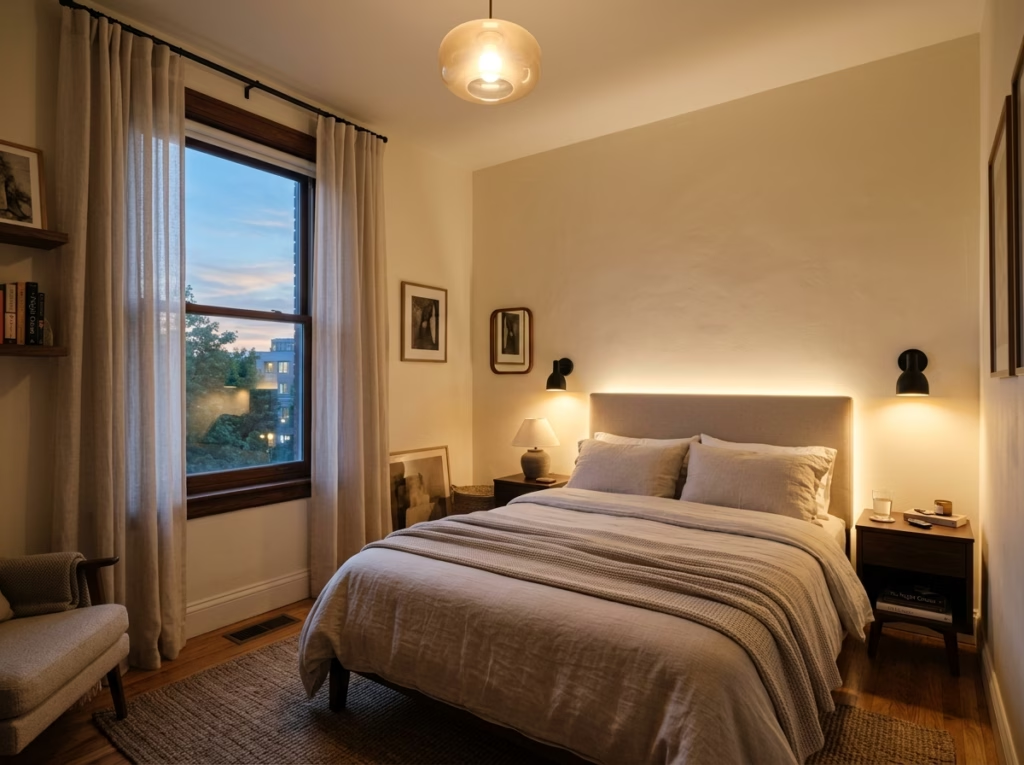
Pictured: A cosy box room bedroom at dusk, demonstrating advanced lighting techniques. The window features elegant semi-sheer linen curtains hung from a black curtain track positioned high up near the ceiling, making the window look tall.
Incorporate Layered Illumination
Effective illumination extends far beyond a solitary central ceiling fixture. To introduce genuine depth, layer your lighting:
- Ambient Light: Provided by a soft, diffused overhead pendant or flush-mount ceiling installation.
- Task Light: Achieved via wall-mounted sconces or slim bedside reading lamps to keep surfaces clear.
- Accent Light: Created by tucking flexible LED strips along the back of a headboard or underneath floating shelves.
Design Tip: Use warm white bulbs rated at approximately 2700 Kelvin. They generate a gentle, inviting radiance that feels considerably more restful and spacious than cooler, blue-toned office lighting.
Advanced Techniques for Establishing Depth
If you want to take your compact bedroom design to the next level, try these advanced styling strategies used by boutique hotels:
Try “Pattern Drenching”
Enveloping your walls, curtains, and bedding in a single unified print eliminates visual interruption points. Without stark contrasts or competing hues, the human eye is considerably less conscious of where the room’s boundaries cease and commence. Vertical striped wallpaper proves particularly effective here, as it instantly elongates a room’s proportions.
Establish a Focal Wall Behind the Bed
Treating the wall behind your bed frame as a personal canvas introduces striking visual interest without overwhelming the rest of the space. A subtle geometric wallpaper or an oversized, colourful upholstered headboard allows you to keep the remaining walls neutral whilst creating a sophisticated sense of depth.
Introduce Texture Without Bulk
Crisp cotton bed linen, delicate bouclé cushions, and soft knitted throws introduce tactile richness without cluttering your physical space. Texture establishes a sense of luxury and warmth in a compact bedroom without adding any physical weight or taking away precious breathing room.
Ready to Make Your Compact Bedroom Work Harder?
Compact bedrooms need never feel cramped or restrictive. With the appropriate layout, scaled furniture, and a few clever visual techniques, even the smallest box room can feel open, functional, and entirely your own.
Begin by charting your floor plan and selecting a supportive, storage-smart bed frame from Bedstar that respects your room’s dimensions. Utilise pale tones, thoughtfully positioned mirrors, and multi-level illumination to visually break down the walls.
You don’t need to transform everything simultaneously. Select just one concept from this guide—perhaps starting with an under-bed storage system or a new floating shelf layout—and observe the immediate impact it creates. Your bedroom ought to be a space you genuinely relish inhabiting, regardless of its size.
Key Takeaways
- Measure Twice, Buy Once: Map out a scaled floor plan factoring in a minimum of 60 cm side clearance around your bed and accounting for door/wardrobe swing arcs.
- Invest in Storage-First Bed Frames: Choose space-saving small doubles, low-foot-end frames, or lift-up ottoman bases to unlock massive storage cavities without wasting floor space.
- Go Floating & Vertical: Swap bulky bedside tables for wall-mounted floating shelves and sconces to keep the floor visible and make the room appear wider.
- Manipulate Light and Height: Hang curtain tracks high and wide to elongate windows, and position large mirrors opposite light sources to visually double the room’s dimensions.
- Layer Textures, Not Furniture: Keep furniture editing strict, but layer tactile fabrics like linen, bouclé, and cotton to add depth and warmth without physical bulk.

The Home Renovation Shows Team is led by property experts dedicated to the full lifecycle of building management—from the grit of a structural overhaul to the precision of professional operational hygiene. With a focus on sustainable maintenance and data-driven property care, the team provides actionable insights for both homeowners and business leaders. Whether navigating a DIY renovation or optimizing a commercial workspace, their mission is to ensure every square foot is functional, healthy, and built to last.


