What Happens When Two Cultures Meet in One Classroom
September has a particular smell to it. New books, sharpened pencils, the faint nervousness of a fresh start. For most pupils, the first week of term means catching up with old friends. For a growing number, it means something richer: sitting beside someone who grew up thousands of miles away, speaks a different first language, and has a completely different idea of what “normal” looks like.
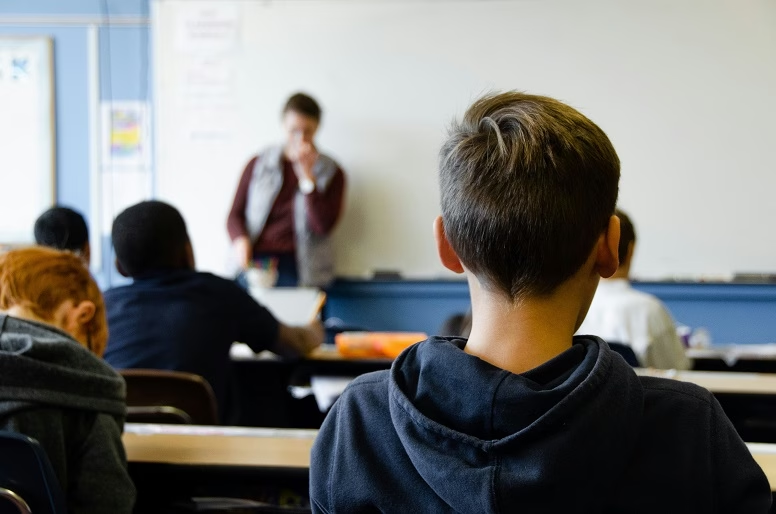
That first week, when term is still finding its feet, is when two cultures first meet in one classroom. It is worth paying attention to what happens next.
The quiet awkwardness of early September
Nobody arrives knowing how it will go. A pupil from Dublin and a pupil from Madrid can find themselves at the same desk, both unsure how to begin. One cracks a joke that lands flat. One misreads a gesture. These small moments matter, because they are the raw material of learning to live alongside people who are not like you.
The good news is that children adapt faster than adults expect. By October, the pupil who hovered at the edge of the lunch queue is swapping snacks and translating slang. What looked like a barrier in week one often becomes a friendship by half term.
Lessons that travel
A classroom with more than one culture in it quietly changes how subjects are taught. A history lesson about the twentieth century feels different when someone in the room has family who lived through it from the other side. A debate about food, festivals or family traditions stops being abstract and becomes a genuine exchange.
Teachers who get this right do something simple: they treat difference as a resource rather than a problem to manage. The pupil who speaks three languages is not a logistical headache. They are a window into how the rest of the world thinks. Schools with strong boarding and international communities, such as a secondary school with pupils from across the world, see this play out across the whole academic year.
Why timing matters
The start of term is the single best window for this kind of mixing. Routines have not hardened yet. Groups have not settled into fixed shapes. A child placed in a diverse classroom in September has months ahead to build the easy familiarity that makes cultural difference feel ordinary rather than remarkable.
Leave it too late and the cliques have formed. Start early and the whole year benefits.
What children actually take away
Ask a pupil at the end of the year what they learned from a classmate who grew up elsewhere, and they rarely mention anything grand. They mention a recipe. A word they now use without thinking. A completely different way of celebrating a birthday. The small things.
But under those small things sits something larger. A child who has spent a year genuinely alongside someone from another culture carries a quiet confidence into adulthood. They are harder to surprise, slower to judge, and more comfortable in a room full of strangers. In a world that keeps getting more connected, that is not a soft skill. It is a serious advantage.
Institutions with a long tradition of welcoming pupils from many countries understand this well. Clongowes Wood College has built much of its character around exactly this kind of mixing, and families looking into how it works can read more at https://clongowes.net.
The real takeaway
Two cultures meeting in one classroom is not a smooth, tidy process. It involves misunderstandings, patience and the odd awkward silence. But by the time summer arrives and the books are packed away, something has shifted. The pupils know a little more about the world, and a great deal more about getting on with people who see it differently.
That is a lesson no textbook teaches. It only happens when you put the right people in the same room and give them a year to figure each other out.
—
About the author
Clongowes Wood College is a long-established boarding and day school in County Kildare, Ireland, with a tradition of educating pupils from Ireland and around the world. The college draws on its international community to help young people build academic ambition alongside genuine cultural understanding, preparing them for life and study well beyond the school gates.

The Home Renovation Shows Team is led by property experts dedicated to the full lifecycle of building management—from the grit of a structural overhaul to the precision of professional operational hygiene. With a focus on sustainable maintenance and data-driven property care, the team provides actionable insights for both homeowners and business leaders. Whether navigating a DIY renovation or optimizing a commercial workspace, their mission is to ensure every square foot is functional, healthy, and built to last.