
DIY Hacks for Improving Your Home’s Energy Efficiency
With the increasing cost of energy now adding weight to both the environmental and recent political reasons to view our own personal energy consumption with an eye to reducing use and minimising wasted energy in our homes. At the end of the day our energy cost per unit is above our own control and dictated by market forces, but how we use it and how much benefit we receive per unit is something where we can make a real difference. In recent news, it has emerged that our homes in the UK are some of the worst insulated in Europe. This is a situation that we as individuals can improve within our own homes and one that immediately benefits us with a home that is more comfortable yet cheaper to live in. Here are our DIY hacks for improving your home’s energy efficiency.
The Appliance Of Some Common Sense
Energy in our homes is used in many different ways, taking these in turn for an energy efficiency makeover, let’s first turn our attention to domestic appliances. With the domestic appliances we use in our daily lives, like washing machines, dishwashers, fridges and freezers, all have one thing in common which can go a long way to ensuring they are as efficient in use as possible. They all work most efficiently when they are full. Although this is straightforward to see with something like a dishwasher of washing machine, where a full load takes the same amount of energy to clean as a partial load. It may come as a surprise to hear that the same applies to fridges and freezers. Keeping them full reduces the overall running costs. This has a number of reasons including losses when you open the fridge or freezer door and the cold air within is lost into the room. The less air space within the appliance, the less this happens. Our hack here is to fill spare freezer space with ice packs and spare fridge space with long-lasting products that are best served cold like canned drinks. Implementing this hack within a busy home can show surprising savings and is well worth doing.
Blown Away
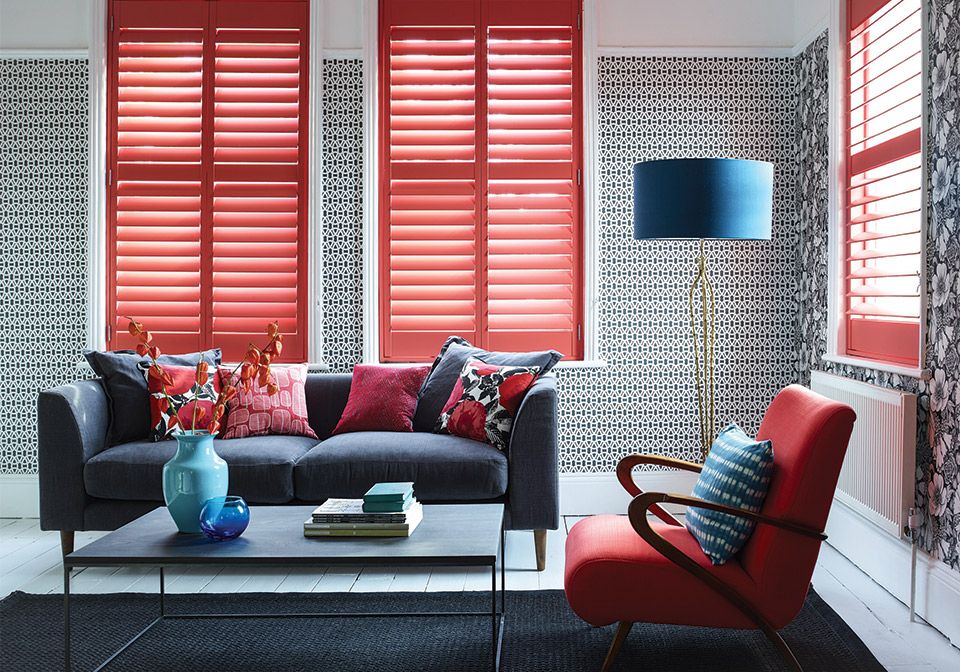
Reducing draughts and improving the insulation of our homes is a great way to improve energy efficiency. We are all familiar with seeing fibreglass insulation in our lofts and this may be one reason that when we think of insulation we automatically think of a physical insulating product like foam or fibreglass. But insulation can be achieved through design and creating areas of non-moving air that insulate by reducing the conduction of heat as well as the air’s ability to form convection currents which can take the warm air from within a room and pass it over colder external walls and windows. Reducing the air’s ability to move and convect against windows is a great way to improve energy efficiency. Obviously doing this with insulating foam or fibreglass is completely impractical as we need our windows to transfer both heat and light into our rooms during the day. There is a solution and our hack for forward-thinking insulation and efficiency improvements for our windows is to install plantation shutters that stop the draughts from wasting heat and keep the warmth in our homes. Plantation shutters were once something that could only be supplied and installed professionally and at significant costs as they are a premium product with significant aesthetic appeal. Thankfully this is no longer the case and high-quality DIY shutters are now available from California Shutters that are easy to fit yourself. This means energy savings can be seen much quicker as the initial outlay is much lower, but nothing is lost in quality, leading to a product that will return energy savings year after year. California Shutters offer comprehensive easy-to-follow guides and videos to guide and support homeowners through every step, including measuring up windows, ordering bespoke shutters and final installation.

Shedding Light On The Subject
Lighting within our homes can be a significant energy user and is worth our scrutiny. In recent years our reliance upon incandescent lighting, where a heated filament glows to provide light, has disappeared. New technology like LED lighting gives a far more efficient way to illuminate our homes. Here our hack is to look at your home’s existing lighting and ascertain what bulbs are in use and their base fitting style. Most older lighting of an incandescent type will come with a B22 bayonet fitting, modern LED bulbs are now available with this bayonet fitting meaning that you can simply replace the inefficient bulbs in your home with modern energy-efficient types and yield savings that once would have taken complete replacement of the existing light fitting. As we head into the darker winter months this can be a quick low-cost improvement which will show energy efficiency improvements immediately.
If you have any hacks you have discovered for improving a home’s energy efficiency we would love to hear and share them in the comments section.
*collaborative post

The Home Renovation Shows Team is led by property experts dedicated to the full lifecycle of building management—from the grit of a structural overhaul to the precision of professional operational hygiene. With a focus on sustainable maintenance and data-driven property care, the team provides actionable insights for both homeowners and business leaders. Whether navigating a DIY renovation or optimizing a commercial workspace, their mission is to ensure every square foot is functional, healthy, and built to last.